


Attractions
Vinh Moc Tunnels Guide: History, Structure, Visiting Tips & More
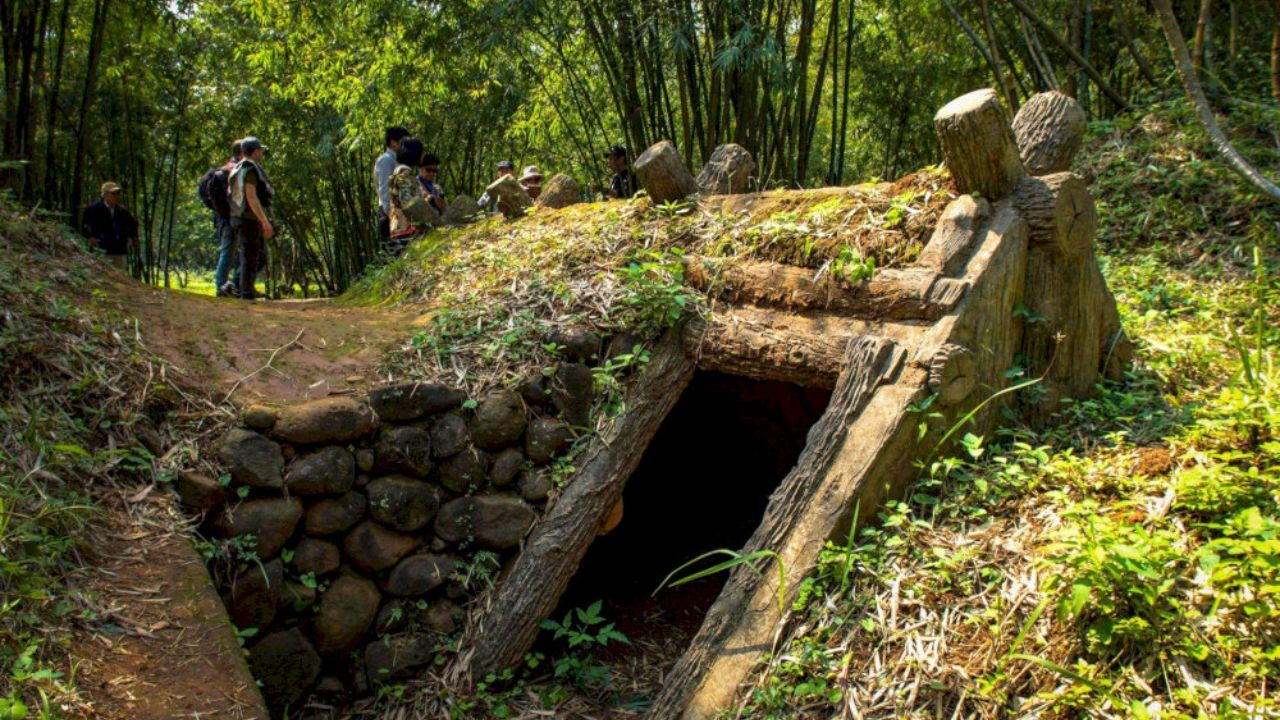
If you are planning a trip through central Vietnam, the Vinh Moc Tunnels deserve a spot right at the top of your list. This place is not just another stop on a map. It is a real, breathing piece of Vietnam’s history, and honestly, once you walk through it, you will understand why so many travelers call it one of the most moving sites in the country.
In this guide, I will walk you through what the Vinh Moc Tunnels are, how they came to be, what the structure looks like underground, what you can actually see there, how to get there, when to go, and what other historical sites you can pair with your visit. So grab a coffee, and let’s get into it.
What Are the Vinh Moc Tunnels?
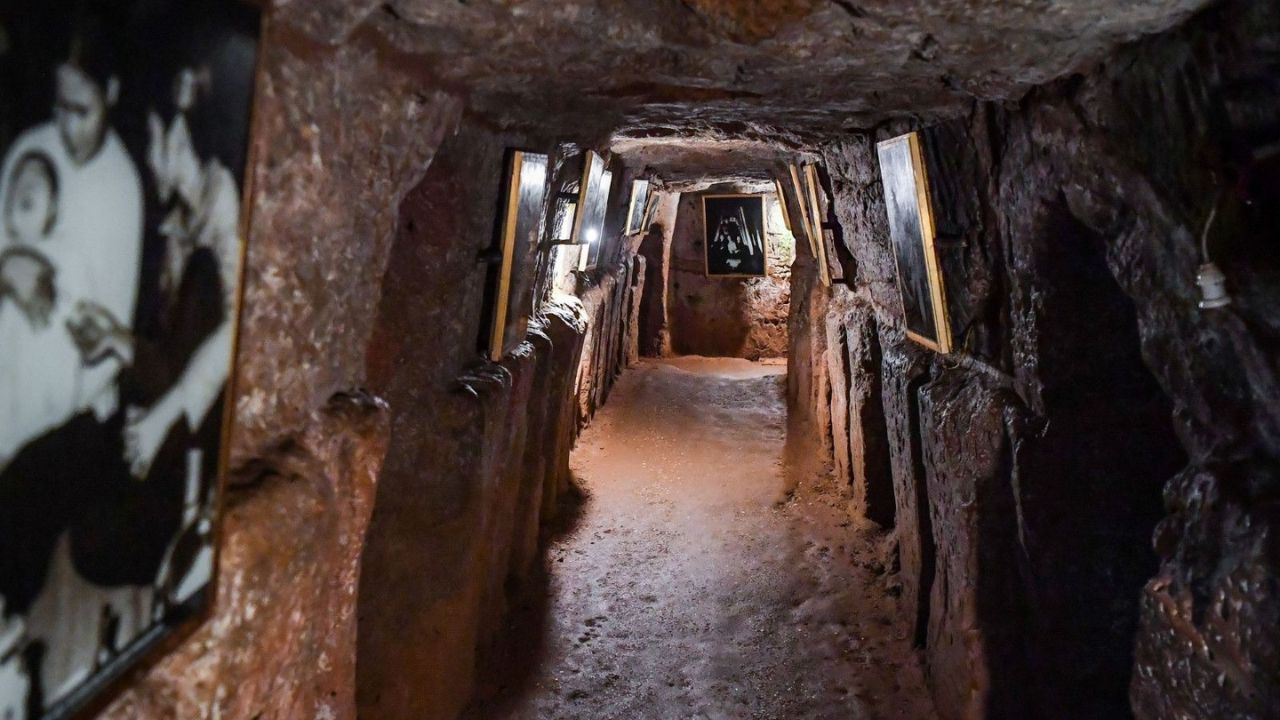
The Vinh Moc Tunnels are widely known as the largest tunnel system in Vietnam, and once you see the scale of it, you will believe that claim right away. This is not a small hideout dug in a hurry. It is a full underground village, built by ordinary villagers who refused to leave their home even under constant bombing.
Unlike some war relics that only served military purposes, this Vinh Linh tunnel village functioned as a home, a shelter, a military base, and a storage point all at once. People lived here, worked here, and even raised children here. That is what makes it different from many other DMZ tunnels Vietnam sites you might read about elsewhere.
The tunnels sit in Vinh Moc village, which belongs to Vinh Linh commune in Quang Tri province. This region was, historically, right on the front line, and that location is exactly why the tunnels became so important. Quang Tri province is considered a historical site hub in general, packed with war era locations, and Vinh Moc is the crown jewel of that list.
The tunnels were not built only for hiding. They were a full residence, a place to sleep, cook, and give birth, alongside their role as a military base. On top of that, the tunnels supplied Con Co military island, which means this Con Co island supply route was a lifeline during the war. Without these tunnels, that supply mission would have been nearly impossible.
History and Origin of the Vinh Moc Tunnels
Life Under Bombing in Quang Tri Province
During the resistance war, Quang Tri province absorbed close to 40 percent of all bombs dropped across Vietnam. Read that again. Almost half of the entire country’s bombing load landed on one province.
In Vinh Linh district alone, each resident endured up to seven tons of bombs and artillery. I still find that number hard to fully process, and I grew up hearing these stories from my own family.
That mindset is exactly why an entire Vietnam War tunnel system was born here, instead of people simply fleeing the area.
Le Xuan Vy and the 300-Day Construction Effort
Construction began in 1965, led by a man named Le Xuan Vy. He directed soldiers and local residents through 300 days of nonstop digging.
The team excavated more than 3.7 million cubic meters of rock and soil, which resulted in 114 tunnels and around 100,000 shelters spread across 70 villages in 15 communes. That is not a random tunnel here and there. That is an organized, calculated underground network, connected by a trench system stretching about 2,000 kilometers.
Daily Life Underground for Over 2,000 Days
Families lived underground for more than 2,000 days and nights. During the day, they hid from bombing raids. At night, they came back to the surface to farm, produce supplies, and move goods secretly. Life still happened down there too. People got married, raised families, and remarkably, 17 children were born inside the tunnels.
At its peak, the tunnels sheltered up to 1,200 people at once. When you stand inside and picture that many people living in such tight quarters, it genuinely gives you chills.
Structure and Scale of the Tunnel System
Three Levels and Their Depths
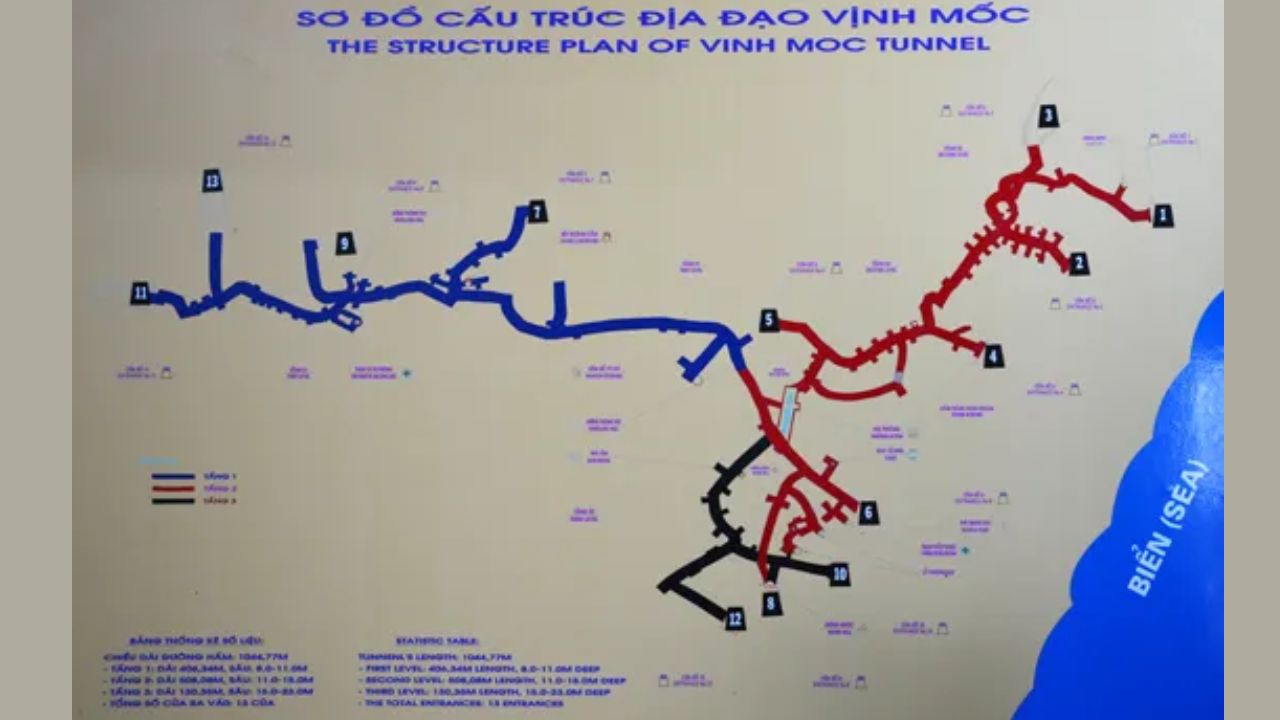
The Vinh Moc Tunnels have three levels, and the whole system stretches about 1,071 meters in total length, with depths ranging from 10 to 23 meters below the surface.
- Level 1 sits 8 to 11 meters deep, stretching 421 meters, with passage width between 0.9 and 1.1 meters. This level served as a shelter and combat maneuvering zone.
- Level 2 goes 11 to 15 meters deep across 508 meters, and this was the main living area, lined with small family chambers, each holding two to four people.
- Level 3 reaches the deepest point at 23 meters, running 130 meters, used mainly to store food and military supplies, plus it held a water source for the whole underground community.
The 13 Entrances and Natural Ventilation Design
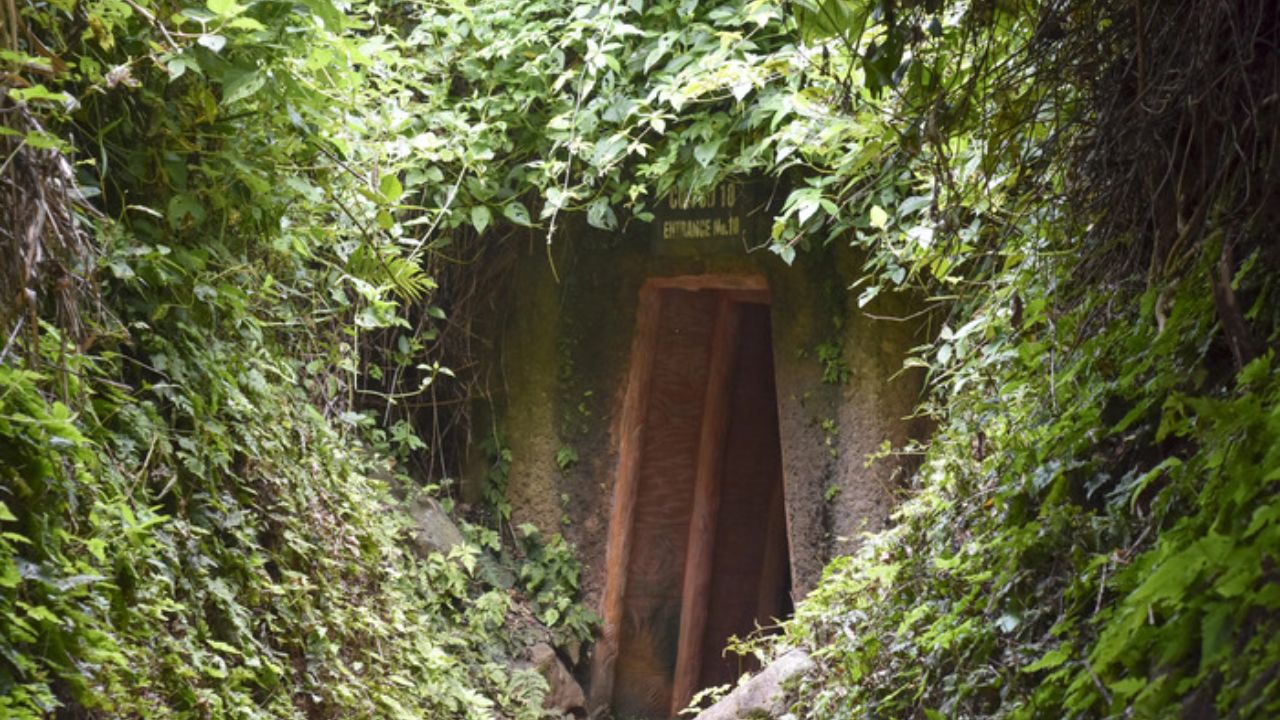
There are 13 entrances in total, with 7 facing the sea and 6 leading toward the hills. What amazes me is how these entrances were positioned according to seasonal wind direction, so fresh air kept flowing naturally through the tunnels. That is why, even though the tunnels are deep and dim, the air inside stays surprisingly comfortable, warm during winter and cool during summer.
Family Chambers, Communal Rooms, and Functional Spaces
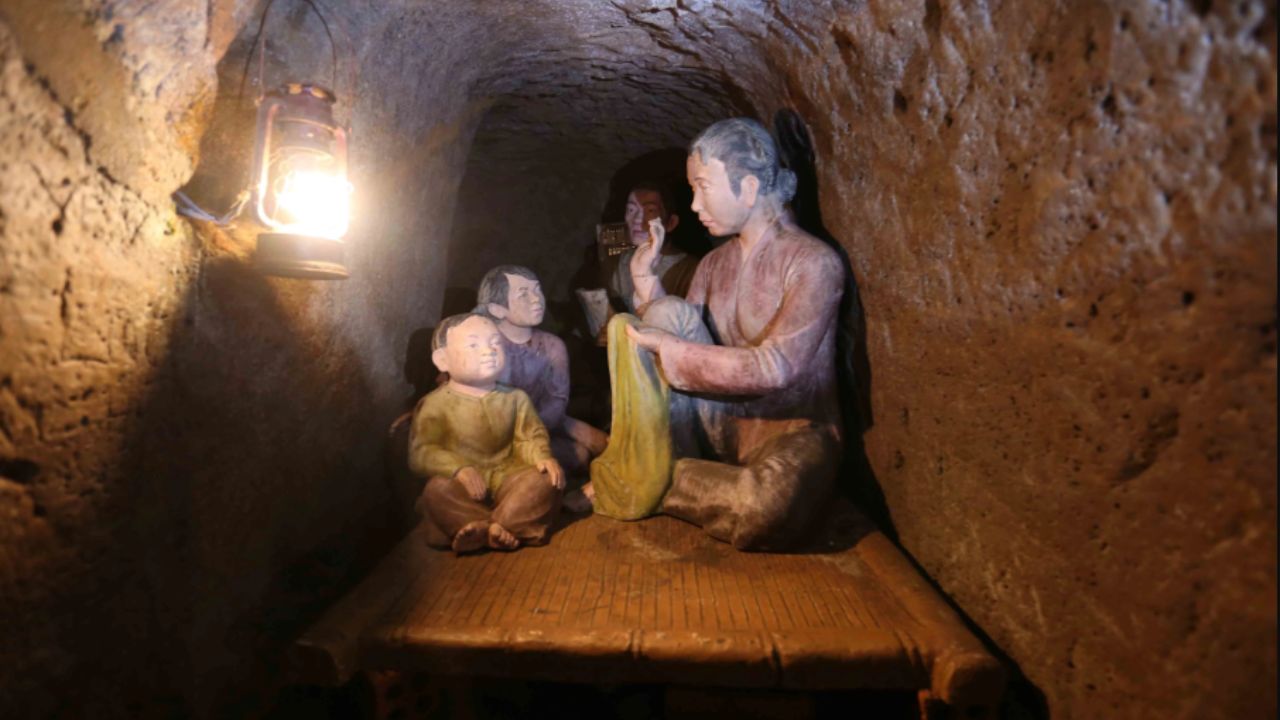
Walking through the tunnels, you will notice small chambers carved along the passageways, often called family apartments. Some sections were restored to show communal halls, maternity rooms, first aid stations, and even a small classroom.
Compared to what I imagined before my first visit, seeing these tiny rooms recreated with such detail made the whole history feel personal rather than distant.
What to See When Visiting the Vinh Moc Tunnels
Welcome Center and Documentary Room
Your visit usually starts at the welcome center, where you can view old photos, historical documents, and a short documentary. Most visitors spend around 20 minutes here before heading underground, and honestly, I recommend not rushing this part. It sets the emotional tone for everything you are about to see.
Walking Through the Tunnels
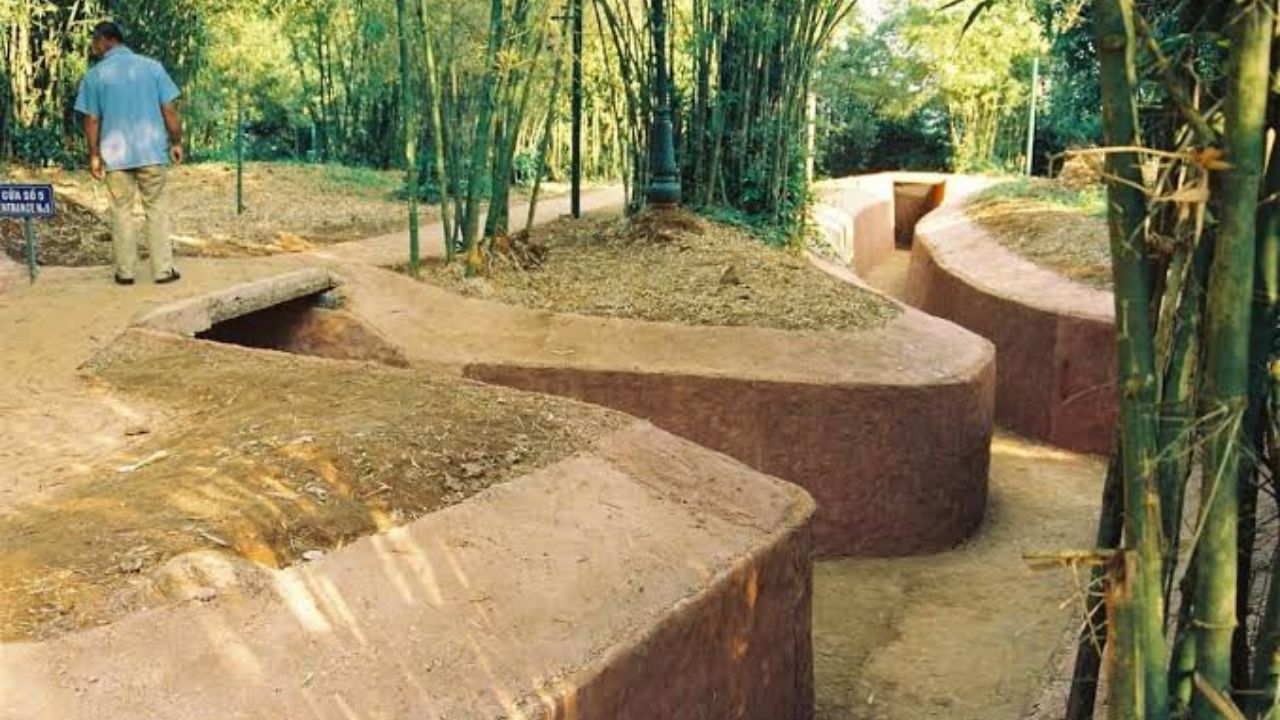
You enter through Gate 3, and the path starts fairly open before getting narrower, lower, and darker the deeper you go. A Vinh Moc tunnel tour guide, included for free, will walk you through the whole route, which takes roughly 30 minutes. You will pass those small family chambers I mentioned earlier, along with communal spaces recreated to show daily wartime life.
Battlefield and Bombshell Exhibition Areas
After the tunnel walk, there is a supplementary exhibition covering the wider Quang Tri battlefield, including materials about the volunteer troops who carved a supply trail to Con Co island. Nearby, a bombshell exhibition area displays actual bombshells and ammunition casings, a quiet but powerful reminder of what this land went through.
How to Get to the Vinh Moc Tunnels
Distance and Directions from Dong Ha
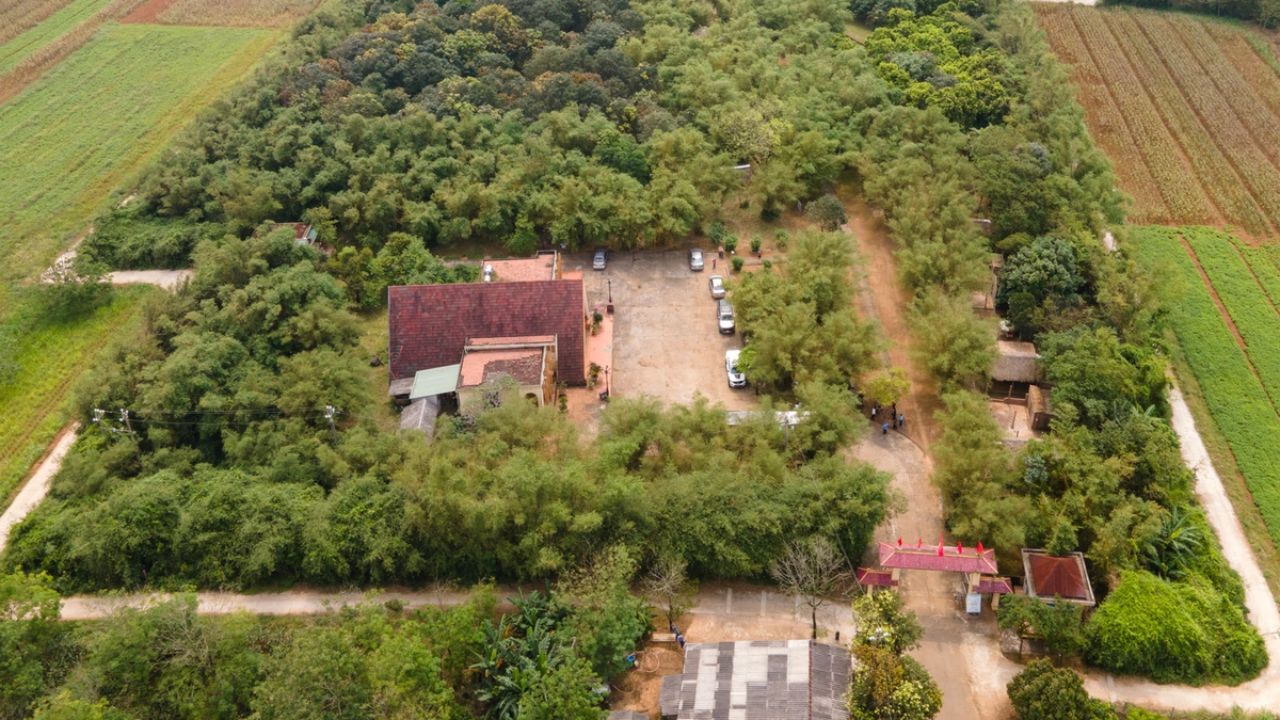
The tunnels sit about 38 kilometers north of Dong Ha city center, which makes it an easy day trip if you are already exploring Quang Tri province. Nearby historical points like Hien Luong Bridge, only about 13 kilometers away, and Quang Tri Citadel, around 43 kilometers away, make it simple to combine several stops in one day.
Transportation Options for Travelers from Other Provinces
If you are coming from farther away, you can fly into Dong Hoi Airport, or take a train or sleeper bus to Dong Ha, then continue by car, taxi, or motorbike to reach the tunnels.
Now, if you are starting your trip from Hue, Da Nang, or Hoi An, there is actually a much smoother way to do this. Instead of juggling buses and transfers, you can simply book a private car from Phong Nha taxi heading to Phong Nha and ask the driver to stop by Vinh Moc Tunnels along the way.
You get to explore the tunnels at your own pace, take photos without feeling rushed, then continue straight to Phong Nha without wasting a whole extra day. It is a flexible option, and if you want, our team at Phong Nha Taxi can arrange this kind of private car with a stop at Vinh Moc built right into your route.
| Phong Nha taxi offers private transfer from or to nearby cities such as: |
Opening Hours, Entrance Fees, and Visit Duration
The Vinh Moc Tunnels are open daily from 7:00 AM to 5:00 PM. The entrance fee sits at 50,000 VND per adult and 25,000 VND per child, and this Vinh Moc entrance fee includes a free tour guide, which honestly feels like a steal considering how much history you get out of it. Most visitors need between 1 hour 30 minutes and 2 hours to see everything properly, so plan your schedule with that in mind.
Best Time to Visit the Vinh Moc Tunnels
Thanks to that clever wind based ventilation design, the tunnels stay open year round without issue. That said, if you want the most comfortable trip overall, the dry season from March to August is ideal. The weather stays dry and sunny during this window, which is perfect if you plan to combine your visit with outdoor exploration around the province.
Nearby Historical Sites to Combine With Your Visit
Hien Luong Bridge and Ben Hai River
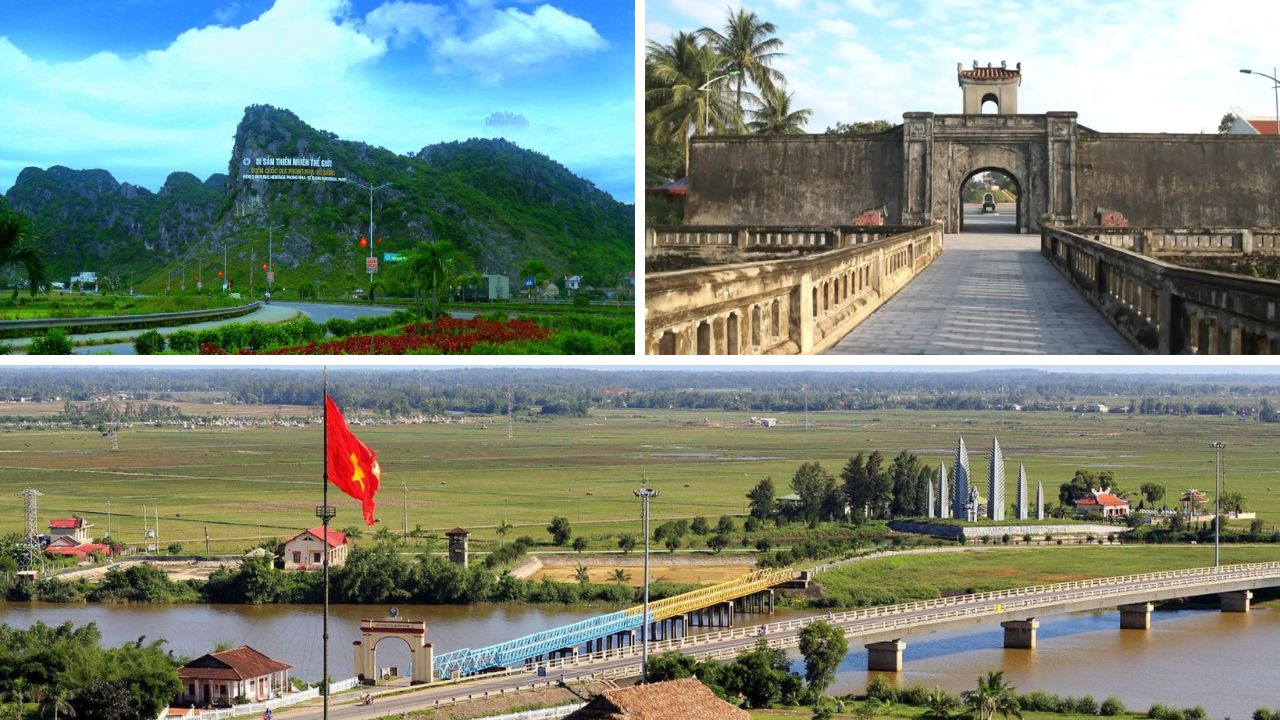
Just a few kilometers away, Hien Luong Bridge and the Ben Hai River mark the historical line that divided Vietnam into north and south from 1954 to 1975. You can walk across the bridge and visit the exhibition nearby to hear the stories tied to this painful chapter, a moment that really puts the whole region’s history into perspective.
Quang Tri Ancient Citadel
Around 43 kilometers away, the Quang Tri Citadel is famous for the brutal 81 day siege that took place there. It now serves as a memorial for the soldiers who lost their lives defending it.
Dong Hoi and Phong Nha – Ke Bang
Further along, about 80 kilometers away, Dong Hoi is the hometown of General Vo Nguyen Giap, blending centuries of history and culture. And around 120 kilometers out, Phong Nha – Ke Bang connects to the legendary Truong Son supply route, home to sites like the Eight Voluntary Youth Cave and immersive experiences recreating wartime transport conditions.
You also shouldn’t miss the top things to explore in Phong Nha when coming here.
FAQs About Vinh Moc Tunnels
Is Vinh Moc Tunnels worth visiting?
Yes, without a doubt. Unlike some historical sites that feel more like museums, this one feels alive, since it was an entire underground village rather than a simple hideout.
How long does it take to visit Vinh Moc Tunnels?
Most people need between 1 hour 30 minutes and 2 hours to see the welcome center, the tunnels, and the exhibition areas properly.
Is Vinh Moc Tunnels similar to Cu Chi Tunnels?
Not really. Cu Chi Tunnels are narrower and were built mainly for military combat, while Vinh Moc functioned as a full underground residential community for civilians and soldiers together.
What should I bring when visiting?
Comfortable shoes are a must, since some sections are low and narrow. A small flashlight can help too, though most areas already have basic lighting installed.
Can I visit Vinh Moc tunnels when it rains?
Yes, the Tunnels stay open even on rainy days, but keep in mind that heavy rains between September and November tend to turn the outdoor walkways muddy and slippery, and some of the lower tunnel sections might feel a bit damp or have light water dripping through.