


Attractions
Hien Luong Bridge, Quang Tri

Brief introduction to Hien Luong Bridge
Hien Luong Bridge is located in Vinh Linh District, Quang Tri Province, in the Central region of Vietnam. The bridge was built in the early 20th century, and has an important strategic position in the resistance war against the US to save the country.
Hien Luong Bridge is a symbol of the desire for peace and unification of Vietnam, and is a destination not to be missed when traveling to Quang Tri. The bridge spans the Ben Hai River, which was the temporary boundary dividing Vietnam into two regions, North and South, for more than 20 years.
Hien Luong Bridge is not only a traffic project but also an important historical and cultural relic. The bridge is a symbol of the will to unify the country of the Vietnamese people, a place that marks the tireless efforts of our army and people in the struggle for independence and freedom.
Hien Luong bridge architecture
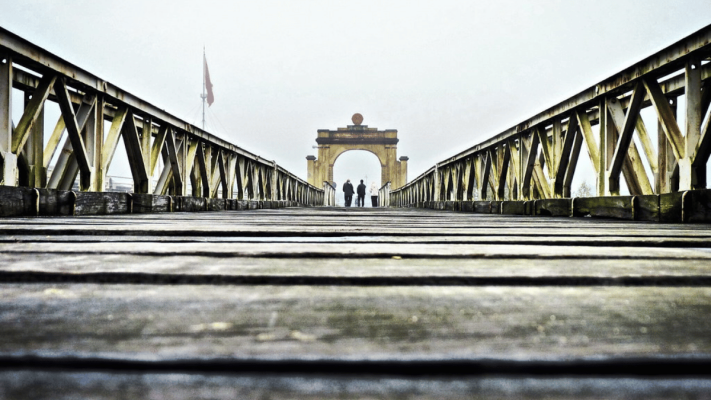
From a simple buoy bridge, Hien Luong Bridge has gone through many transformations to become a solid reinforced concrete bridge as today. That change is not only about materials, but also in terms of historical and cultural significance that it carries in itself.
Hien Luong bridge architecture before the war (1950-1954)
The original Hien Luong Bridge was built in the early 20th century, a simple buoy bridge, connecting the two banks of Ben Hai. After the Geneva Agreement (1954), Vietnam was temporarily divided into two regions of the North and South, and Hien Luong bridge became a temporary military line boundary. The architectural characteristics of the bridge during this period are buoy bridge, simple structure, mainly serving the needs of travel and transporting goods across the river.
Hien Luong bridge architecture in the war (1954-1975)
During the Vietnam War, Hien Luong Bridge became the target of the US Air Force. The bridge was collapsed many times and was rebuilt. Architectural characteristics in this period are more solidly built, with bearing steel structure, but still temporary, due to frequent damage.
Hien Luong Bridge architecture after the war (from 1975)
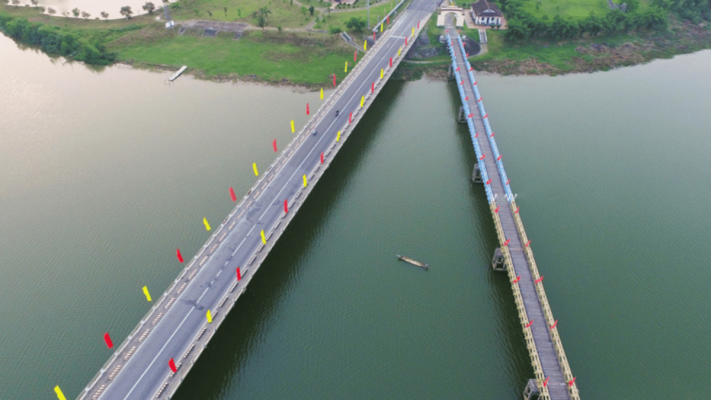
After the country was unified (1975), Hien Luong Bridge was restored and rebuilt solidly, becoming a symbol of unity. The architectural characteristics of Hien Luong Bridge after the war are the bridge built of reinforced concrete, with modern design, ensuring safety and large load capacity. The new bridge has a length of more than 180m, including 5 beats, the sphere is more than 10m wide.
Hien Luong bridge architecture today
Currently, Hien Luong bridge has built a new bridge 230m long, 11.5m wide, next to the old bridge facing upstream, this is the main bridge, where people move.
Hien Luong Bridge History
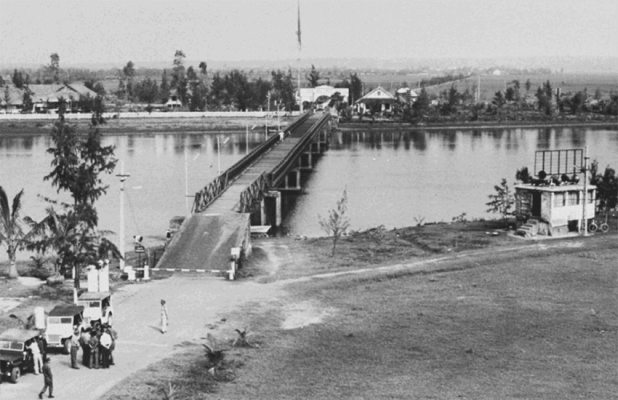
The role of Hien Luong Bridge in the anti American resistance war:
- The boundary of the division of two regions: After the Geneva Agreement (1954), Vietnam was temporarily divided into two regions of the North – South, and Hien Luong Bridge became a temporary military route.
- The symbol of patriotism and the unified will: Hien Luong prayed to become a place to express the unified will of the country of Vietnamese people. Despite being divided, people in the two regions are always towards each other, wishing the country to unify.
- Location of diplomatic struggle: During the resistance war against the US, Hien Luong Bridge was the place where diplomatic struggle between the two regions. Negotiations, exchanges of prisoners and goods often take place here.
- The goal of the US Air Force: During the Vietnam War, Hien Luong Bridge became the target of the US Air Force. The bridge was collapsed many times and was rebuilt.
Outstanding events associated with Hien Luong Bridge:
- “Sound War”: In the 1960s, the two sides of the route often used the loudspeaker to propagate and call for unification of the country. “Sound War” between the two regions has become an integral part of Hien Luong Bridge history.
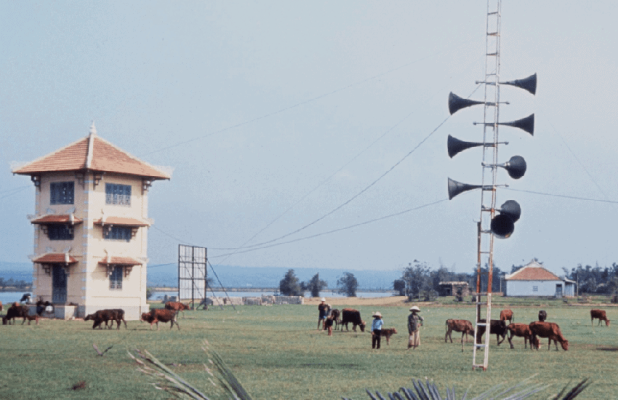
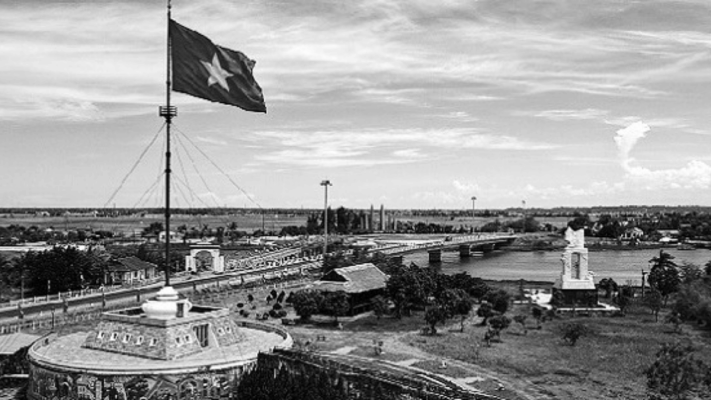
- The “flag battle”: From 1954 to 1967, it took a unique “race” to gain the advantage of the height of the flagpole and the width of the flag. The “Flag Fighting” event: One of the most notable events is the unique “flag” in history. Hien Luong flagpole is not only the stop of national ideals but also a place for each side to show its superiority.
- Colorful battle:
In the political contradiction between the two sides, the Hien Luong Bridge and the Ben Hai River are caught up in the dispute because this is the place where the two opposing governments are faced.
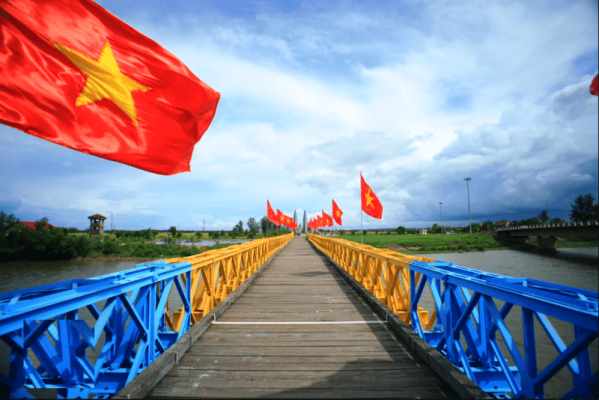
In the middle of the bridge there is a horizontal, 1cm white line used as a boundary. At first, the Republic of Vietnam took the initiative to paint half of the southern bridge into the blue color, the Democratic Republic of Vietnam immediately painted the remaining half of the bridge.
After the Republic of Vietnam turned brown, the Democratic Republic of Vietnam also repainted brown. Just like that, Hien Luong Bridge always changes the color, whenever the Republic of Vietnam paints another color to create two opposing colors, immediately the Democratic Republic of Vietnam immediately repainted the breed. Finally, in 1975, the bridge had the same unified blue.
Today, Hien Luong Bridge still retains its two separate colors of blue and yellow to commemorate the history of Vietnam. It helps us understand the complexity of the Vietnam War and the long journey towards peace and unification.
- Prisoners’ returns: Hien Luong Bridge is also the place where many prisoners return between the two regions. The images of Vietnamese soldiers released have become a symbol of the courage and resilient will of the nation.
How to get to Hien Luong Bridge
There are many ways to get to Hien Luong Bridge, depending on your starting point and the means of transport you choose:
Buses: From big cities like Hanoi, Da Nang, Hue, you can easily find buses to Quang Tri. Popular bus companies like Hoang Ha, Camel Travel, Phuong Trang… all have routes to Quang Tri province every day, with many time slots for you to choose from. After arriving in Dong Ha city, you can take a bus or taxi to Hien Luong Bridge.
Train: The closest train station to Hien Luong Bridge Ben Hai River is Dong Ha Station. You can buy train tickets to Dong Ha from major stations such as Hanoi, Da Nang, Hue… Visitors can buy tickets directly at the station or buy online here: https://dsvn.vn/#/. From Dong Ha Station, you can transfer by bus or taxi to Hien Luong Bridge.
Motorbike: Riding a motorbike is an exciting experience for those who love to explore. However, make sure you are in good health and drive safely. You can follow National Highway 1A or Ho Chi Minh Road to Hien Luong Bridge.
Private car: Choose a private car so you don’t have to worry about driving, finding your way or parking. The driver will take you to Hien Luong Bridge and Ben Hai River and ensure you have the most comfortable trip.
In addition, you are free to adjust your tour schedule and departure time. The driver has driving experience and is knowledgeable about the roads, helping you travel more safely, especially on unfamiliar roads.
Attractions near Hien Luong Bridge
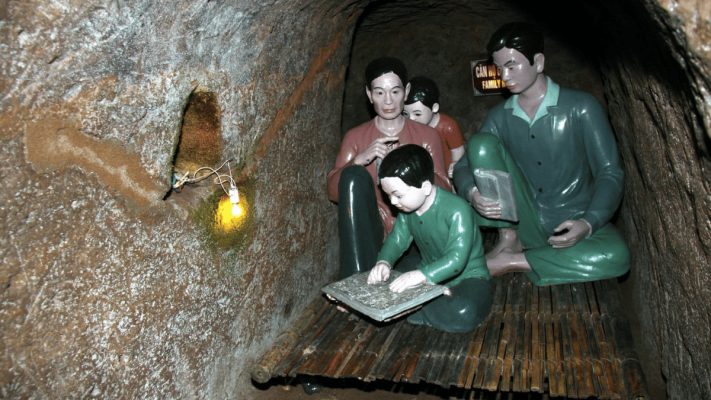
- Vinh Moc Tunnels: is a nearly 2km long underground tunnel system, built in the 1960s to serve the resistance war against America. Vinh Moc tunnels were not only a hiding place but also a place for people to live during wartime.
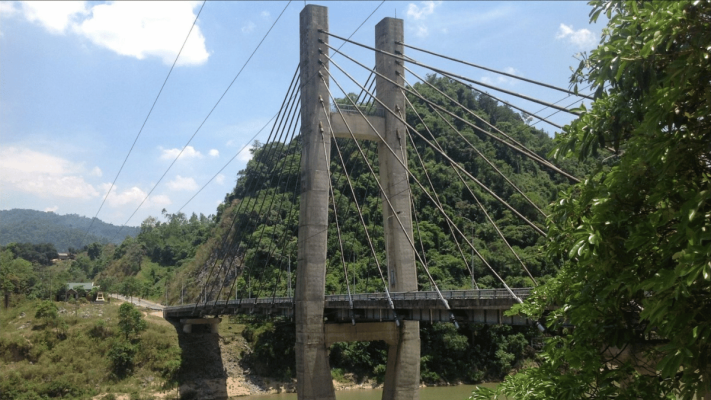
- Dakrong bridge: Located on the Ho Chi Minh trail, it had the vital task of transporting weapons, food and goods to support the southern battlefield. For that reason, Dakrong bridge became a key target of the US air force. They continuously bombed and shelled to cut off this important supply route.
- Ta Con airport: is a military airport built during the French colonial period. During the Vietnam War, Ta Con airport was one of the important US air bases.
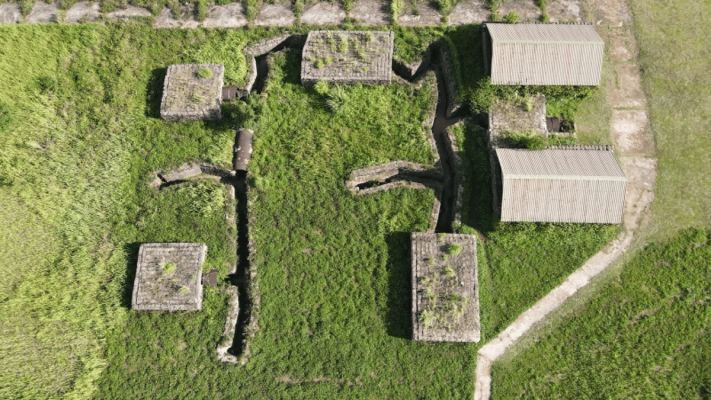
- Quang Tri Ancient Citadel (34 km from Hien Luong Bridge) was the site of the famous 81-day battle in 1972. Today, visitors can explore the citadel, visit the museum, and learn about this pivotal chapter of the Vietnam War.
- Commander Cave (132 km from Hien Luong Bridge) served as the headquarters of Regiment 559 during the Vietnam War. Visitors can experience a 9D VR truck ride, explore the Seven-Storey Cave, and learn about the Ho Chi Minh Trail.
Hien Luong Bridge Tour Schedule from Hue/ Da Nang / Hoi An
From Da Nang/ Hoi An/ Hue go to Phong Nha by private car, passing Hien Luong Bridge and Ben Hai River, tourists will stop to visit this historical site. Tourists will visit the Monument of the heroic martyrs, visit Hien Luong flagpole, the symbol of the will to unify the country. And visit Hien Luong – Ben Hai Museum to learn more about the history of Vietnam.
Read more: How to get from Hoi An to Phong Nha by private car
Hien Luong Bridge is not just a bridge, it is a historical relic, a symbol of the courage and aspiration for peace of the Vietnamese people. Coming here, visitors can not only admire an architectural work, but also relive the heroic history, deeply feel the value of independence, freedom and unity. Come and explore Hien Luong Bridge, to understand more about Vietnam, about the Vietnamese people, and bring back memorable experiences!
Pingback: Vietnamese Demilitarized Zone (DMZ): A Local's Heartfelt Guide