


Attractions
Phong Nha Botanic Garden Visitor Guide: Tickets, Trails, and Wildlife

If you are planning your dream trip to our spectacular jungle paradise, you have likely heard of our massive caves. But let me tell you a secret as a local who grew up running around these woods: you cannot miss the stunning Phong Nha Botanic Garden.
This 77.1-hectare nature reserve sits right in the beating heart of our lush national park. It serves as a living, breathing miniature version of the entire UNESCO World Heritage Area. Whether you want to trek deep into a tropical jungle hike, cool off under a massive waterfall, or see rare wildlife up close, this place has it all.
Let me walk you through everything you need to know about navigating the trails, buying tickets, and experiencing this green paradise just like we locals do.
Detailed Admission Prices, Opening Hours, and Daily Tour Options
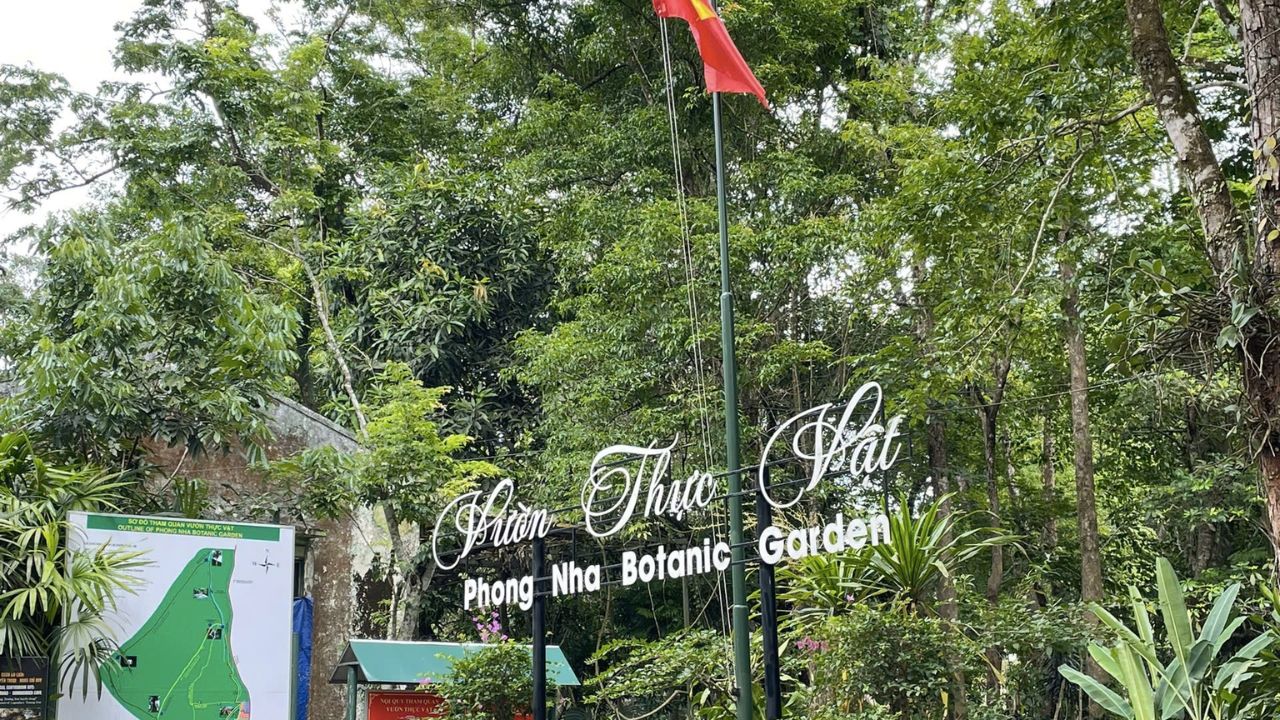
Reaching the garden requires traveling to kilometer 9 along Road 20 Quyet Thang in Bo Trach District, roughly 12 kilometers northwest of Phong Nha Town. The reserve opens daily from 08:00 AM to 05:00 PM, making it easy to fit into a broader regional travel plan.
Entrance Fees and Practical Add-ons
The reserve structures its fees based on whether you prefer a self-guided exploration or an educational package:
- Standard Tour (Self-Guided): 80,000 VND per person. This option allows independent access to all major trails and landmarks. Entry is completely free for children under 1.3 meters tall.
- Specialized Tour (Guided): 120,000 VND per person. This requires an advanced booking and does not accommodate walk-ins. To protect the trails and minimize environmental impact, groups are capped at a maximum of 20 guests per tour, with a limit of 5 tours running per day.
- On-Site Services: If you select the standard entry but want professional commentary later, an English-speaking tour guide can be hired for 300,000 VND. Visitors can also participate in local reforestation efforts by purchasing a memorial tree planting experience for 100,000 VND per tree.
How to Get to Phong Nha Botanic Garden
Finding this hidden sanctuary is quite easy once you know our local roads. The park is nestled at precise geographical coordinates right at kilometer 9 along Road 20 Quyet Thang. This historic road cuts directly through the dense, primary forest boundaries of the greater Phong Nha – Ke Bang National Park.
If you are staying at a homestay downtown, you will be traveling a straightforward distance from key hubs. Specifically, the garden lies exactly 12 kilometers northwest from Phong Nha Town, and around 50km from Dong Hoi. Book a private taxi from Dong Hoi to Phong Nha.
To get here, you can choose from a few straightforward transportation options depending on your preferred travel style:
- Motorbike: This is easily the most popular and convenient option for independent travelers. You can rent a motorbike in Phong Nha for about 120,000–150,000 VND per day. From the town center, simply follow the Ho Chi Minh West Branch Road for about 20 minutes to reach the garden entrance.
- Car: If you are traveling with family or a larger group, you can rent a private car or take a taxi directly from Phong Nha. Rental prices are very reasonable, ranging from 300,000 – 500,000 VND per trip.
- Bicycle: For a slower, more immersive experience where you can really take in the scenery, you can rent a bicycle. However, keep in mind that some sections of the jungle road are quite steep, so a good level of physical fitness is highly recommended!
Navigating the 4-Kilometer Interpretive Trail Loop
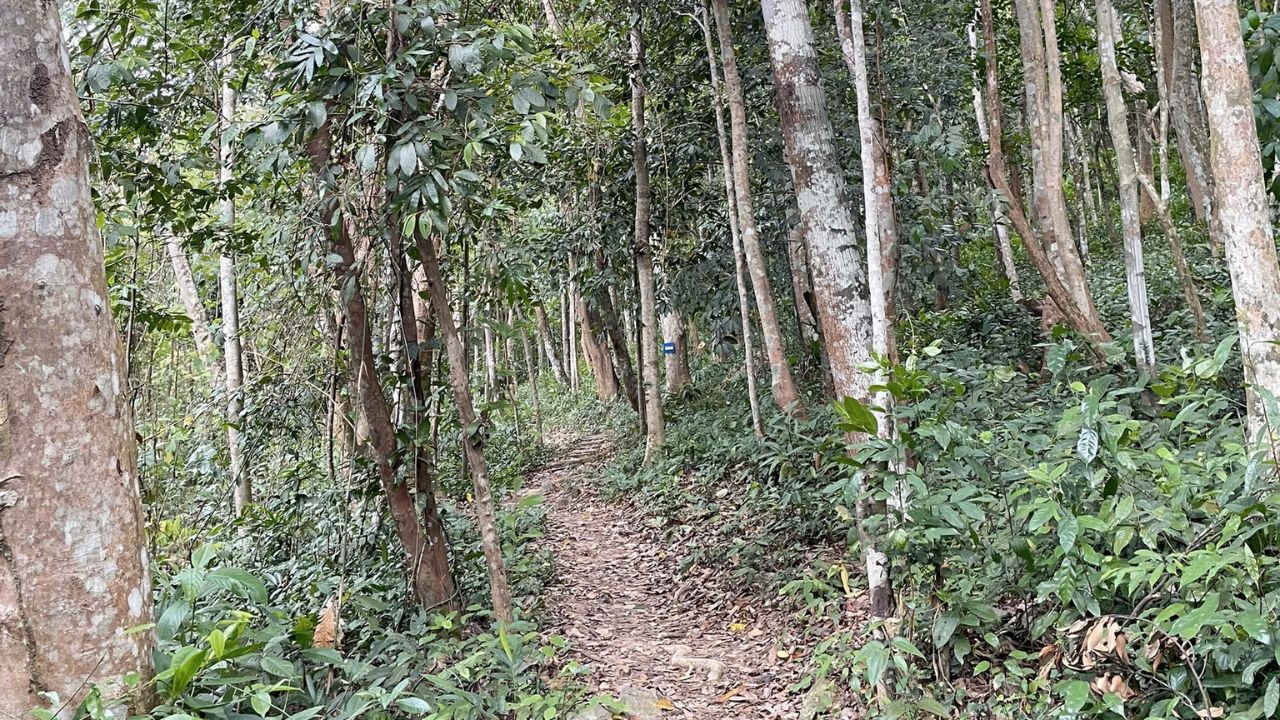
Once you step past the ticket barrier, the real adventure begins! Visitors can choose a trekking route based on their time and fitness level. For a smooth journey, ask staff at the ticket counter for advice on the best trail.
Visitors can explore two main trekking routes, each offering unique experiences and stunning natural scenery:
- Route 1 (2,500m): Exhibition House → Animal Rehabilitation Area → Vang Anh Lake → Peacock Viewing Spot → Gio Waterfall.
- Route 2 (5,000m): Exhibition House → Animal Rehabilitation Area → Peacock Viewing Spot → Interpretive Trail → Gio Waterfall.
One absolute highlight of the park is the Interpretive Trail, connecting the ancient forest to the exhibition house, where you can enjoy fresh air, birdsong, and the serenity of the deep forest. This 4-kilometer interpretive trail loop is not your average smooth city park walkway; it is a raw, real jungle trek.
The terrain profile presents a beautiful challenge, taking you across gentle jungle stream crossings, through sun-dappled forest clearings, and up steep, muddy slopes.
To give you a clear example of what to expect, the path alternates between smooth dirt tracks and slippery limestone rocks. This is why proper footwear and packing preparation will completely make or break your day. Leave the flip-flops at your hotel!
You will absolutely love having sturdy, high-grip hiking shoes. Do not forget to pack a rain poncho, high-strength insect repellent, and plenty of water to stay hydrated.
To get the absolute most out of your hike, you should consider the optimal visitation windows. The dry season between April and August offers the best trail conditions.
I really enjoy walking the loop around 08:00 AM because the air is crisp, the forest is waking up, and the birds are singing their hearts out. It is easily one of the unmissable outdoor adventures near here that you should add to your bucket list.
Key Landmarks and Natural Attractions Along the Route
Wind Waterfall
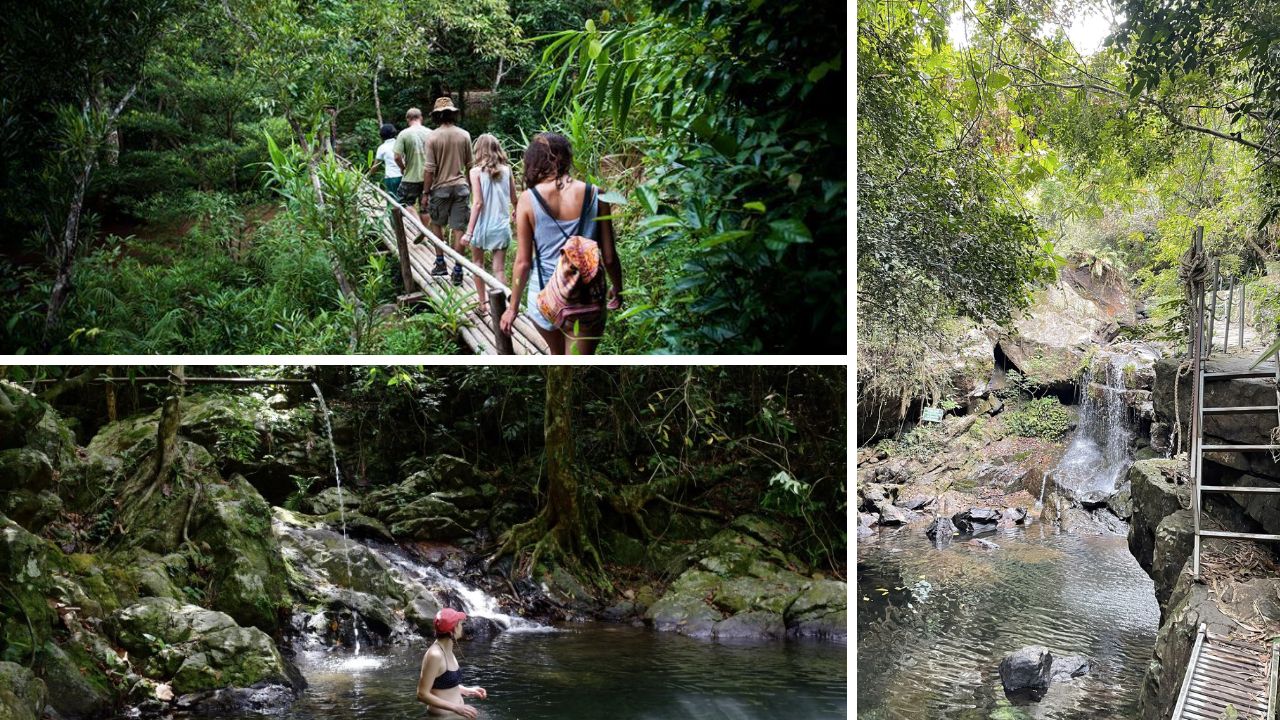
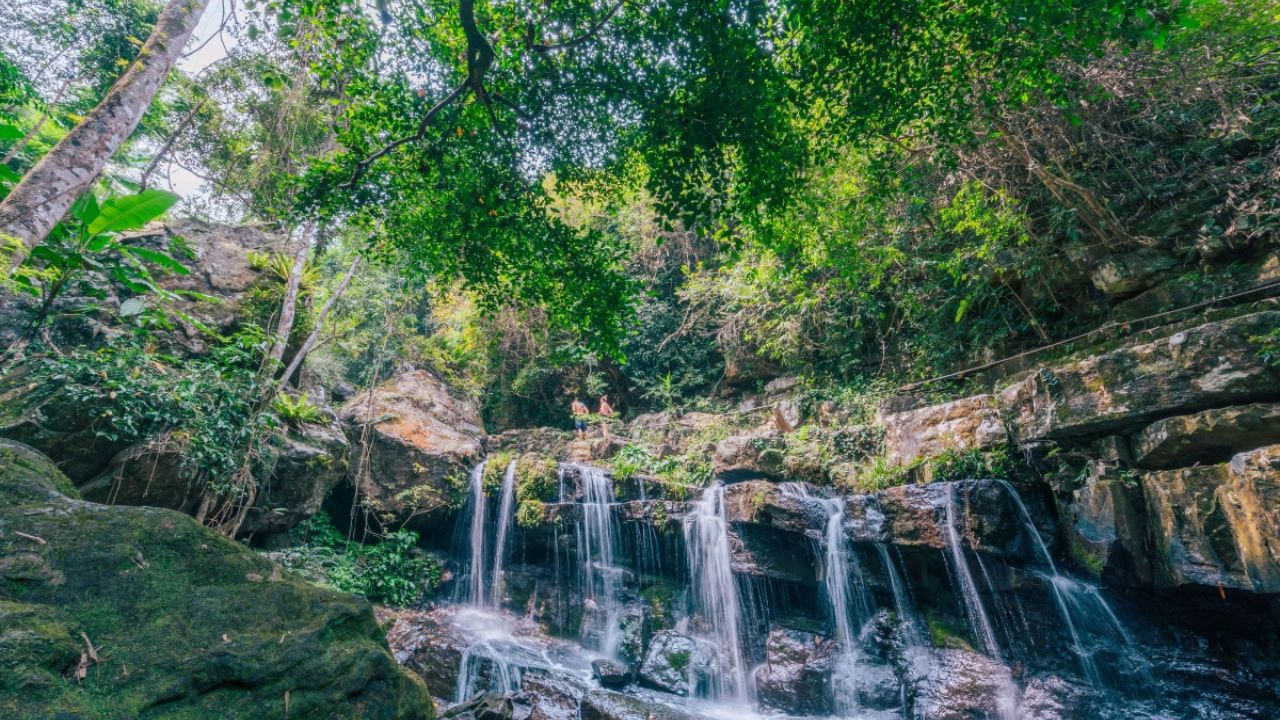
The first massive reward on your hike is the majestic Wind Waterfall. This stunning feature flows like a giant silver ribbon cutting right through the dense green canopy. The waterfall boasts an impressive height, meaning it drops over 30 meters down onto massive, mossy rocks below.
The sight of the water creating a thick, rising mist as the morning sunlight glints off the spray is something I promise you will never forget.
To make things easier for visitors, the park built secure wooden steps. You can safely climb these stairs to enjoy a breathtaking panoramic viewing angle, or you can step down closer to the base to feel the cool, refreshing spray wash over your face after a hot walk.
Vang Anh Lake
If you continue trekking past the waterfall, the trail leads you to the peaceful oasis of Vang Anh Lake. Tucked away quietly in the heart of the primary forest, the lake boasts a crystal-clear surface that acts like a natural mirror, beautifully reflecting the surrounding greenery.
Unlike the roaring energy of the waterfall, the atmosphere here invites you to take a long, slow breath and unwind. For a great sample photo to show your friends back home, I recommend stepping out onto the large shoreline rocks or sitting along the tree-lined banks where the wild orchids sway gently in the breeze.
Forests of Rare Trees
Next, the trail guides you underneath the dense, towering canopy of our ancient forests of rare trees. This section of the park is an absolute paradise for plant nereds. The garden prides itself on protecting over 500 plant species, practicing both vital in-situ and ex-situ flora conservation.
As you walk, look up to see the massive, centuries-old hardwoods stretching toward the sky. The absolute superstar of this forest is the famous Hundred-Year-Old Star Tree, known scientifically as Hopea vietnamensis. This incredible indigenous species is highly protected, and it officially had its name recorded in conservation logs just recently.
Wildlife Sightings and Rescue Operations
Beyond the beautiful flora, the reserve plays a massive role in protecting our local animals through the on-site Wildlife Rescue Center. This center is not a zoo; it is a sanctuary dedicated to vital rehabilitation efforts.
The hard-working rangers here rescue vulnerable forest animals from illegal poaching and logging, caring for them until they are strong enough to return safely to their natural habitats.
As you quietly explore the surrounding paths, you will have the chance to experience incredible primate and mammal encounters. If you look up into the branches, you might see rare red-shanked doucs or playful pig-tailed macaques swinging through the trees. Wild boars root around the thick undergrowth, while energetic tree squirrels dart across the fallen logs.
The park also boasts incredible avian biodiversity. Keep your eyes peeled and your camera ready to spot magnificent hornbills hiding in the upper canopy. If you are incredibly lucky, you might even catch a rare glimpse of a wild peacock performing its elegant, vibrant courtship dance in a forest clearing.
Educational Exhibits and Conservation Facilities
Specimen Display House
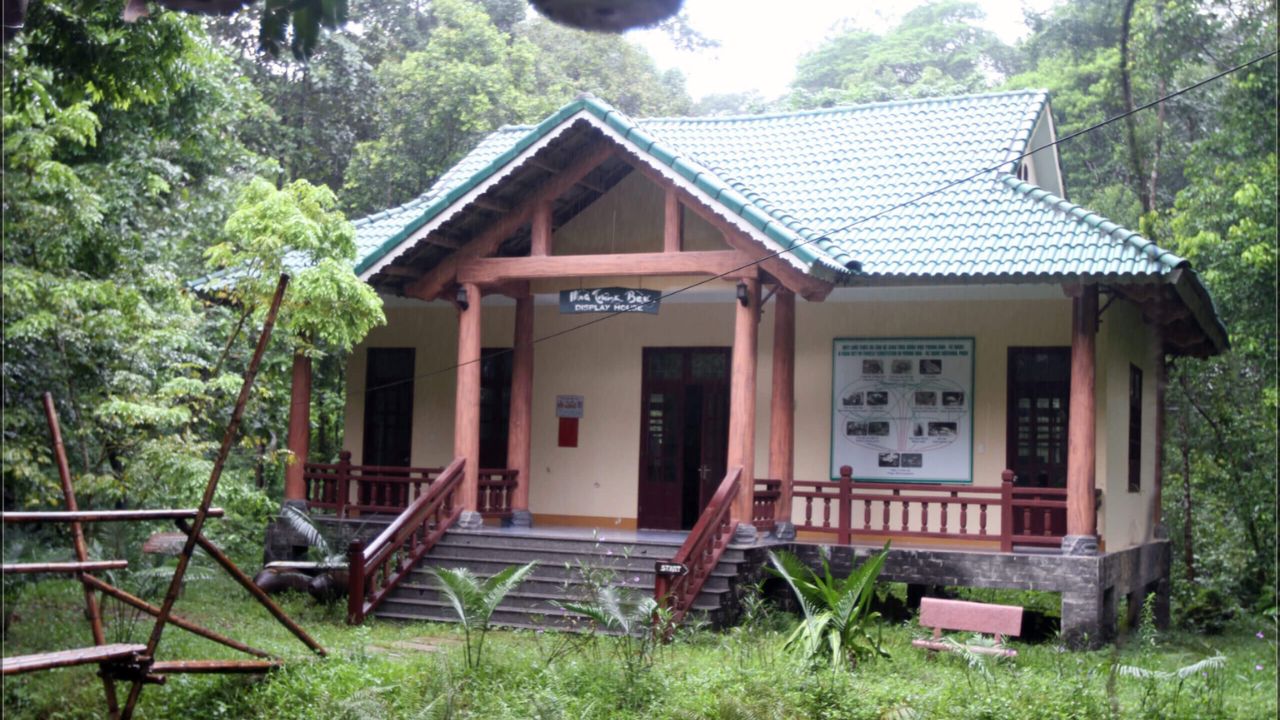
To fully understand the deep history of the jungle around you, you must stop by the Specimen Display House, which officially opened its doors back in 2015. This educational center houses an incredible scientific inventory. The building preserves 181 botanical specimens, which carefully represent 169 distinct plant species across 58 families and 101 genera.
Furthermore, the indoor animal collection showcases 120 species through incredibly detailed, lifelike habitat dioramas that display the complex lives of our local mammals, reptiles, and amphibians. But the real showstopper inside is the prehistoric geological exhibit.
Here, you can look at genuine fossils of ancient four-rayed coral and crinoids, which provides undeniable physical evidence proving the area’s incredible 400-million-year-old geological history.
Seed Nursery
Finally, make sure to spend some time at the seed nursery before you head back to town. This facility serves as the foundational starting point for the park’s regional reforestation and conservation mechanics. Here, expert botanists carefully cultivate high-value native flora to restore sections of the jungle that have been damaged over the decades.
It offers a wonderful hands-on conservation experience for travelers. The staff will happily teach you how to identify rare native tree varieties. You can even choose to purchase authorized seedlings to take with you, including the highly valued and endangered Dalbergia tonkinensis wood. It is a beautiful, educational way to end your journey through the jungle.
Essential Packing List and Visitor Rules for the Jungle Trek
What to Pack
- Footwear: Sturdy hiking shoes or trail runners with deep tread profiles to handle slippery, moss-covered rocks.
- Clothing: Lightweight, breathable long-sleeve shirts and trousers to shield against insect bites and sharp foliage. Pack swimwear if you intend to cool off near the designated water areas.
- Protection: Eco-friendly insect repellent, coral-safe sunscreen, and a lightweight rain jacket for sudden tropical downpours.
- Hydration: Bring a reusable water bottle; there are no trash bins along the interior trail loops to prevent littering.
Park Conduct and Environmental Safety
To maintain the integrity of the nature reserve, all visitors must strictly adhere to a leave-no-trace policy. Do not feed or approach any wild animals, stray from the clearly marked 4-kilometer trail boundaries, or harvest any wild orchids or plants.
Additionally, keep noise levels to a minimum to avoid disrupting the natural behaviors of native birds and primates in the immediate area.
FAQs about Phong Nha Botanic Garden
Is swimming allowed inside the garden?
Yes! You can swim and cool off in the clear, refreshing waters of Vang Anh Lake, which is a popular rest stop along the trekking loop.
How difficult is the 4km hiking trail for young children?
The full loop involves steep wooden stairs, slippery rocks, and stream crossings. While children under 1.3 meters get free admission, the full 4km trek might be too strenuous for toddlers. A shorter walk to the waterfall is a better demo route for families.
Can I buy food and drinks inside the botanical garden?
There are very limited snack stalls near the main entrance ticket booth, but no restaurants inside the deep jungle trails. I highly recommend packing your own water and lightweight snacks for the hike.
What should I do if I encounter a wild monkey on the trail?
Keep a safe distance, avoid showing food, and do not try to feed or pet them. These are wild animals, and maintaining a respectful, neutral stance is the safest way to enjoy the encounter.