


Attractions
Phong Nha Cave vs Paradise Cave: Which One Should You Visit First?
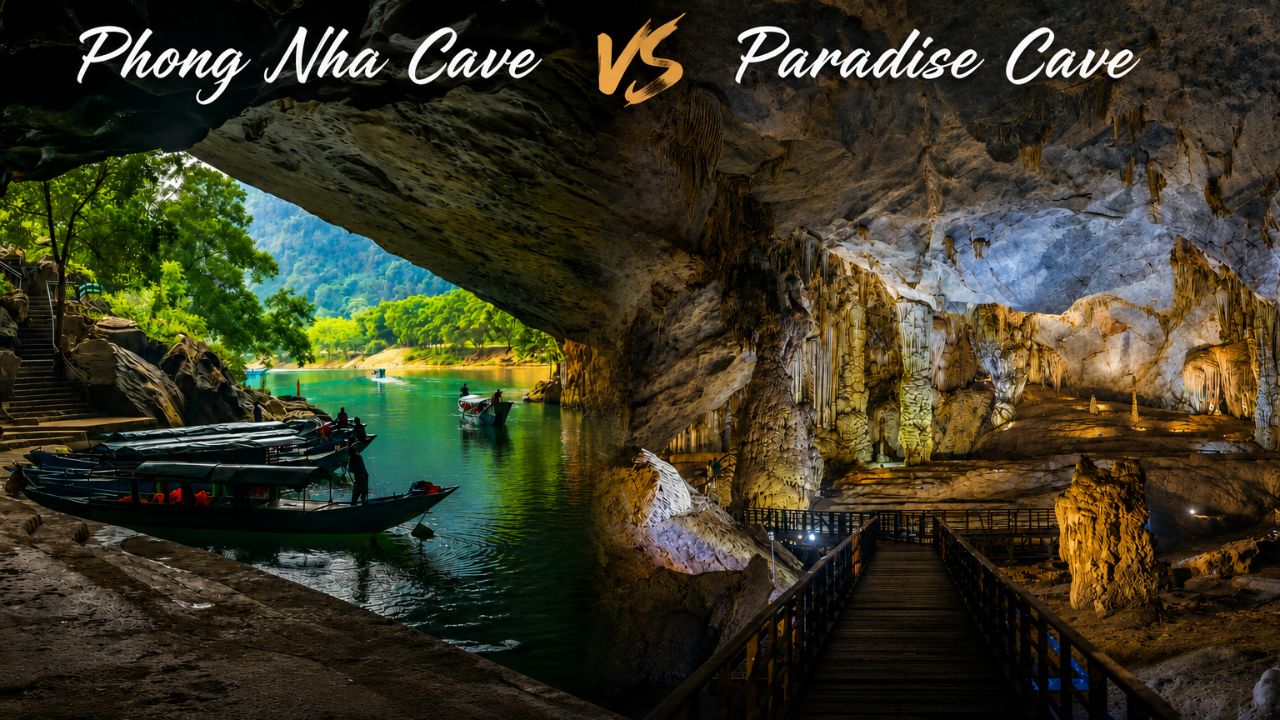
If you’re planning a trip to Phong Nha–Ke Bang National Park, you’ve probably already run into the same question every traveler asks: should you visit Phong Nha Cave or Paradise Cave?
Both sit inside the same UNESCO World Heritage site, both are famous the world over, and both are absolutely worth your time — but they offer very different experiences.
This guide breaks down exactly how they compare, so you can decide which one fits your schedule, budget, and travel style, or whether you should simply do both in one unforgettable day.
Quick Overview: What Makes Each Cave Special
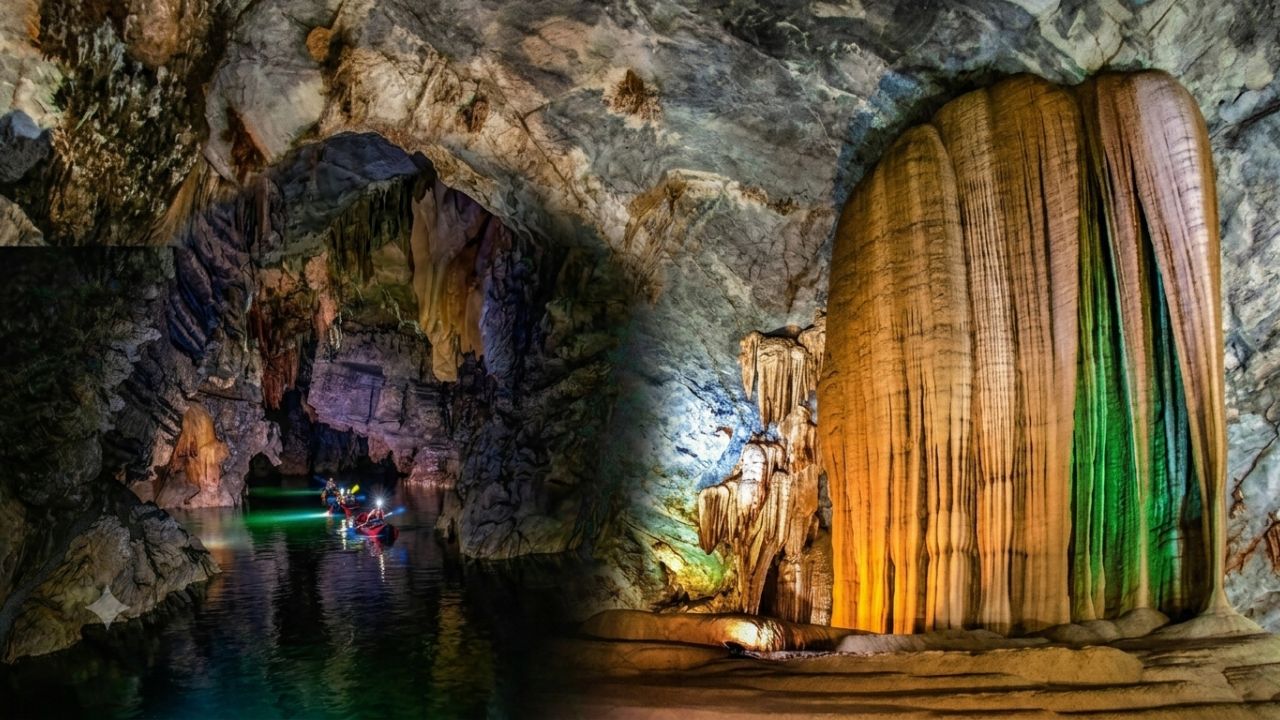
Phong Nha Cave is the park’s original star attraction, first explored by locals and later documented by French scholars over a century ago.
What makes it unique is how you experience it: you glide into the cave by small wooden boat along the underground Son River, drifting past illuminated stalactites before disembarking on a sandy underground beach to explore on foot. It’s a cool, watery, atmospheric journey — more like an adventure than a walk through a museum.
Visitors travel by boat deep into the mountain, gliding past illuminated stalactites, stalagmites, and rock formations that look like dragons, lions, and Buddhist statues. The cool, echoing chambers make it feel like stepping into another world.
Paradise Cave, discovered in 2005 and opened to visitors in 2010, is the newer, flashier sibling. This is a dry cave known for being one of the longest and most spectacular in Asia.
You reach it by road, then walk down a staircase into a dry cave with soaring ceilings — some chambers reach up to 100 meters high — filled with dramatic stalagmite and stalactite formations often compared to a cathedral or an underground palace.
A wooden walkway leads you nearly 1 kilometer into the cave, with the option to continue deeper on a guided trekking route for the more adventurous.
Size and Scenery
In terms of raw scale, Paradise Cave has the edge. It stretches 31 kilometres long with caverns as high as 100 metres, making it roughly three times larger than Phong Nha Cave, and its limestone formations are widely considered the most spectacular in the region. If you’re chasing that jaw-dropping, otherworldly photo, Paradise Cave usually wins.
That said, Phong Nha Cave isn’t lacking in drama — its formations are simply fewer and different in character, and the experience of entering by boat adds a sense of discovery that a walkway simply can’t replicate. As one long-time visitor put it, Phong Nha feels soft, fresh, and fluid, shaped by water and rhythm, while Paradise feels grand, silent, and overwhelming, defined by scale and the delicate craftsmanship of nature.
How to Get to Phong Nha Cave and Paradise Cave
Most travelers arrive in Phong Nha via one of these routes:
- By plane: Fly into Dong Hoi Airport, then travel by road (about 45 minutes to Phong Nha town). Book a transfer from the Airport to Phong Nha.
- By train: Take the train to Dong Hoi Railway Station, then continue by road
- By bus: Overnight buses run from Hanoi, Hue, and Da Nang directly to Phong Nha
- By private car or taxi: The most flexible and comfortable option, especially if you’re visiting both caves in one day or combining them with other sites like the Botanical Garden, Dark Cave, or Duck Stop.
Since Phong Nha Cave and Paradise Cave are located in different parts of the national park, and public transport between attractions is limited, many visitors choose to book a private taxi or car for the day. This allows you to visit both caves, stop for photos along the scenic Ho Chi Minh Trail, and set your own pace without waiting for group tour schedules.
Before hopping between caves, you first need to reach Phong Nha itself. Here are the transfers Phong Nha Taxi runs often for travelers coming from nearby cities:
Difficulty Level
Neither cave is physically demanding, but they do differ:
- Phong Nha Cave: Mostly a seated boat ride with a short walk on the underground beach. Ideal for families, older travelers, or anyone short on time.
- Paradise Cave: A flat wooden walkway makes the first kilometer easy, but reaching the cave entrance itself involves a staircase, and the extended trekking route deeper inside is genuinely strenuous, involving muddy terrain and scrambling.
Time and Budget
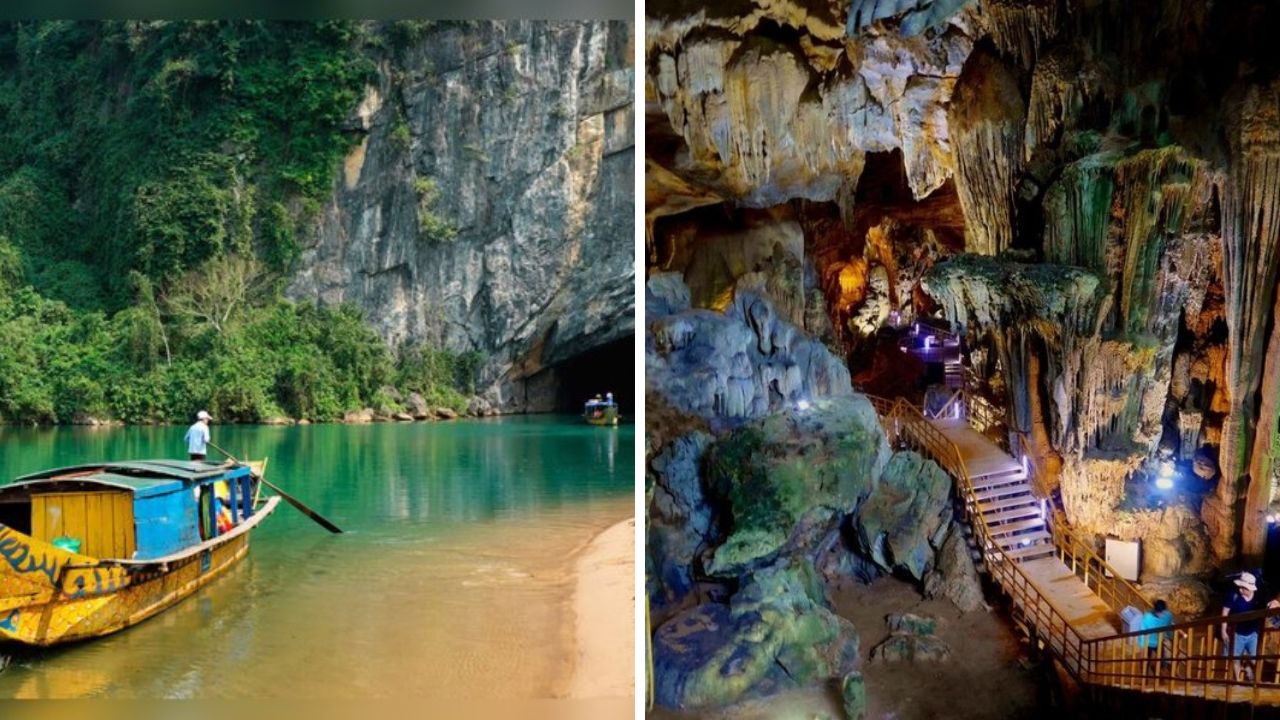
If you only have a half day, Phong Nha Cave is usually the faster option since the boat trip is self-contained and departs locally. Paradise Cave requires more travel time and, if you want the extended trekking experience, a full day.
Budget-wise, the two caves are priced quite differently, since Phong Nha Cave’s fee is split into an entrance ticket plus a shared boat, while Paradise Cave charges a single all-in entrance fee:
Phong Nha Cave ticket price
- Entrance ticket: 150,000 VND per adult; children under 1.3m tall enter free
- Boat rental (up to 12 passengers per boat): 700,000 VND per boat — if you’re traveling solo or in a small group, you can share a boat with other visitors right at the dock to split the cost
Paradise Cave ticket price (2026 season)
- Adults: 270,000 VND, which includes the round-trip electric buggy from the main gate to the foot of the cave mountain
- Children (1.1m–1.3m tall): 145,000 VND
- Children (under 1.1m tall): free of charge
In practice, a solo traveler sharing a boat at Phong Nha Cave might pay as little as 150,000–210,000 VND total, while a group of 12 splitting the boat fee pays only about 208,000 VND per person all-in.
Paradise Cave’s pricing is simpler and fixed per person, so it’s easier to budget for regardless of group size — though it can work out pricier for larger groups who would otherwise split a Phong Nha boat.
Can You Visit Both in One Day?
Of course and many visitors do this. Several visitors report combining both caves in a single day trip, staying locally and arranging a tour that covers both stops without feeling rushed. The two sites are close enough together that a well-planned itinerary, ideally with a private driver, can comfortably fit a morning boat trip through Phong Nha Cave and an afternoon walk through Paradise Cave. Book a tour combining both iconic caves in just one day trip with us.
Tips for Visiting the Caves
- Wear comfortable shoes. Paradise Cave involves walking on stairs and forest paths before you even reach the cave entrance.
- Bring a light jacket. Cave interiors stay cool year-round, even in Vietnam’s hot summer months.
- Start early. Arriving in the morning helps you avoid the biggest tour groups and midday heat.
- Combine both caves in one day. With private transport, it’s entirely possible to visit Phong Nha Cave in the morning and Paradise Cave in the afternoon.
- Book transport in advance during peak season (June to August and around Vietnamese holidays), when demand for cars and tours is high.
So, Which One Should You Choose?
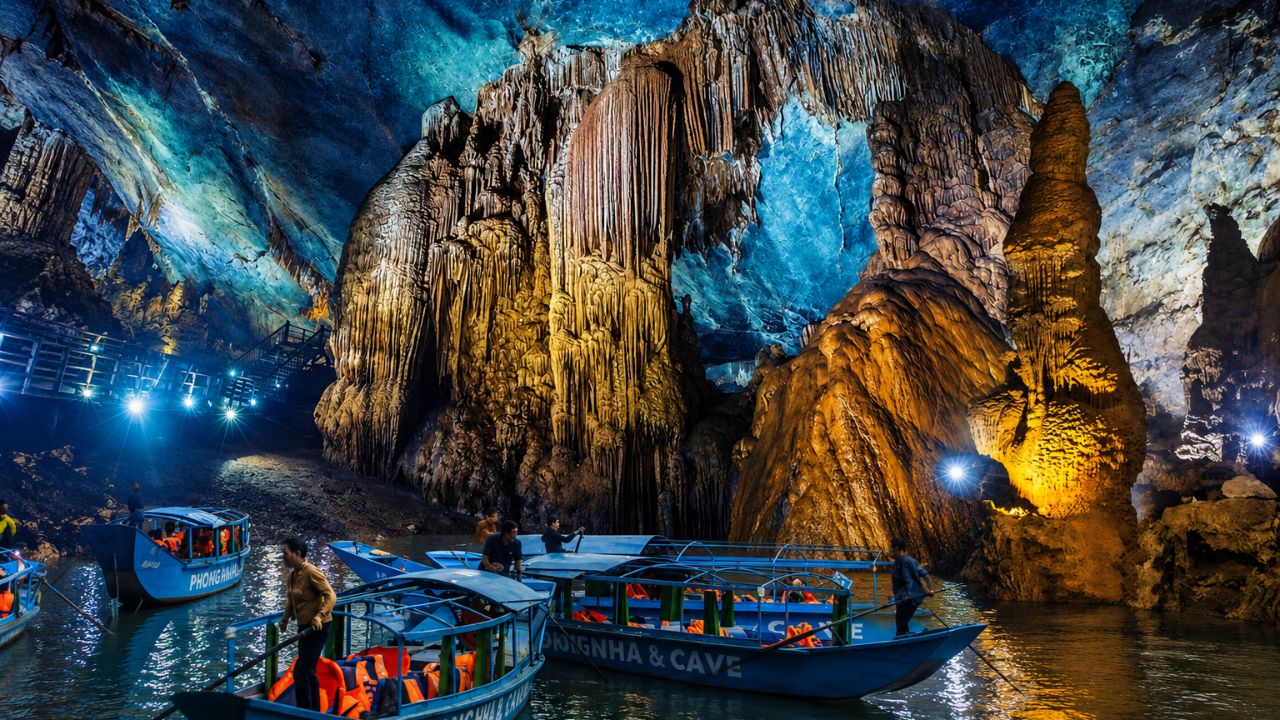
- Choose Phong Nha Cave if: you want a relaxing, scenic boat ride, you’re traveling with kids or elderly family members, or you only have a few hours to spare.
- Choose Paradise Cave if: you want the single most visually spectacular cave in the region and don’t mind a bit of walking (or a serious trek, if you’re up for it).
- Choose both if: you have a full day and want the complete Phong Nha–Ke Bang experience — the calm river journey and the grand dry-cave spectacle, back to back.
Final Tip: Let Someone Else Handle the Driving
Whichever cave (or both) you choose, getting between Phong Nha town, Paradise Cave, and your hotel is much easier with a local driver who knows the roads, tour schedules, and the quickest way to beat the crowds. A private taxi also means you’re not locked into a fixed group-tour schedule — you can linger at Paradise Cave’s viewpoint or catch the boat at Phong Nha Cave whenever you’re ready.
If you’re planning your Phong Nha–Ke Bang itinerary, booking reliable local transport in advance is one of the easiest ways to make sure you see everything you came for — without wasting half your trip waiting on shared tour buses.
Ready to explore Phong Nha and Paradise Cave your way? Book a private car with Phong Nha Taxi and turn your cave-hopping day trip into a smooth, stress-free adventure.